Building a global UX team through change management
Transforming multiple UX teams into a single, scalable global organization
The challenge of moving from small teams to a global team
The mission was clear: unify a set of independent UX teams into a single, scalable global organization. The transition required bringing together multiple teams that were used to working independently, each with their own processes, practices, and ways of solving problems.
There was natural resistance and uncertainty, both from team members and stakeholders.
On the team side by addressing concerns early, pushing for open communication, and showing the value of a unified team instead of imposing it, we were able to turn uncertainty into championing the change and adoption.
For stakeholders, we focused on building a global model that respected each stakeholder's local needs while creating new ways of working. We showcased that delivery would not be disrupted instead, we would bring innovation and greater impact to their projects through UX methodologies.
Building capacity and strategy across the UX scope
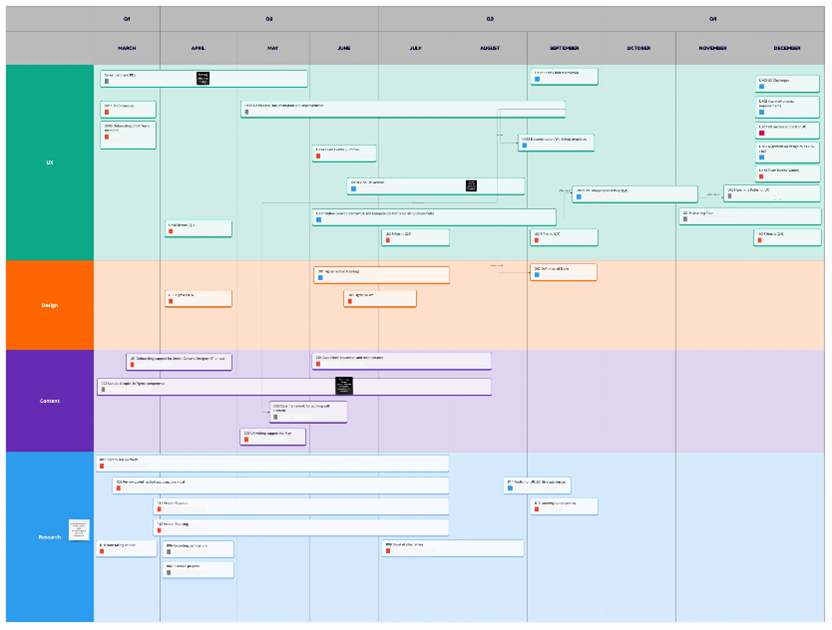
As said before, it was understandable that such a big change would bring doubts to the UX professionals affected by it. A key step was defining a clear tasks to drive how the team should evolve and providing tools to track them and bring transparency to how and why we were changing.
We tracked the needed team changes across the full UX scope, including research, design, content, service design, and operations. This ensured clear ownership, defined responsibilities, and accountability to deliver each task. Also, it gave visibility to key team members owning tasks and ensured everyone felt there was a clear way to collaborate on the changes happening.
This was also a key delivery to the business to track how we were adapting to the change and the progress made. It built a clear way to request needed investment or hiring for improving team capabilities, all with a tactical approach that was easy to discuss.
The openness of the process allowed current team members to see any open position and apply. This ensured that no one felt left behind and that career growth remained a core aspect of the team.
Building bridges with stakeholders and disciplines
The team was designed to work closely with the rest of the organization. We established clear communication, shared metrics, and alignment with business goals to ensure UX contributed directly to outcomes. This helped build trust and made the value of UX visible across teams.
Strong relationships with stakeholders were key to ensuring adoption and long term impact, while also justifying the growth of the team.
Operations as the key stone to ensure a strong team
As a key driver for the team success, we invested in building a strong UX operations layer to ensure clarity, consistency, and scalability. This included defining processes, documenting ways of working, and providing tools and guidelines that supported the entire team.
The UX ops team members work output made it possible to operate effectively at scale and ensured that the UX team could scale while sustaining a cohesive vision.
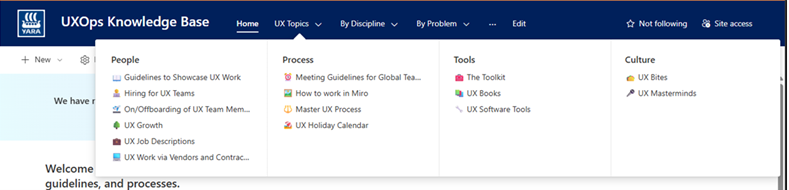
A central outcome of this work was the UXOps Knowledge Base, which served as a primary resource for the entire global organization. By centralizing documentation on people, processes, and tools, we created a shared library that supported onboarding and daily workflows.
Building a culture of learning and growth
As a core value of the team, people growth was fundamental. We focused on creating an environment where learning was continuous and shared.
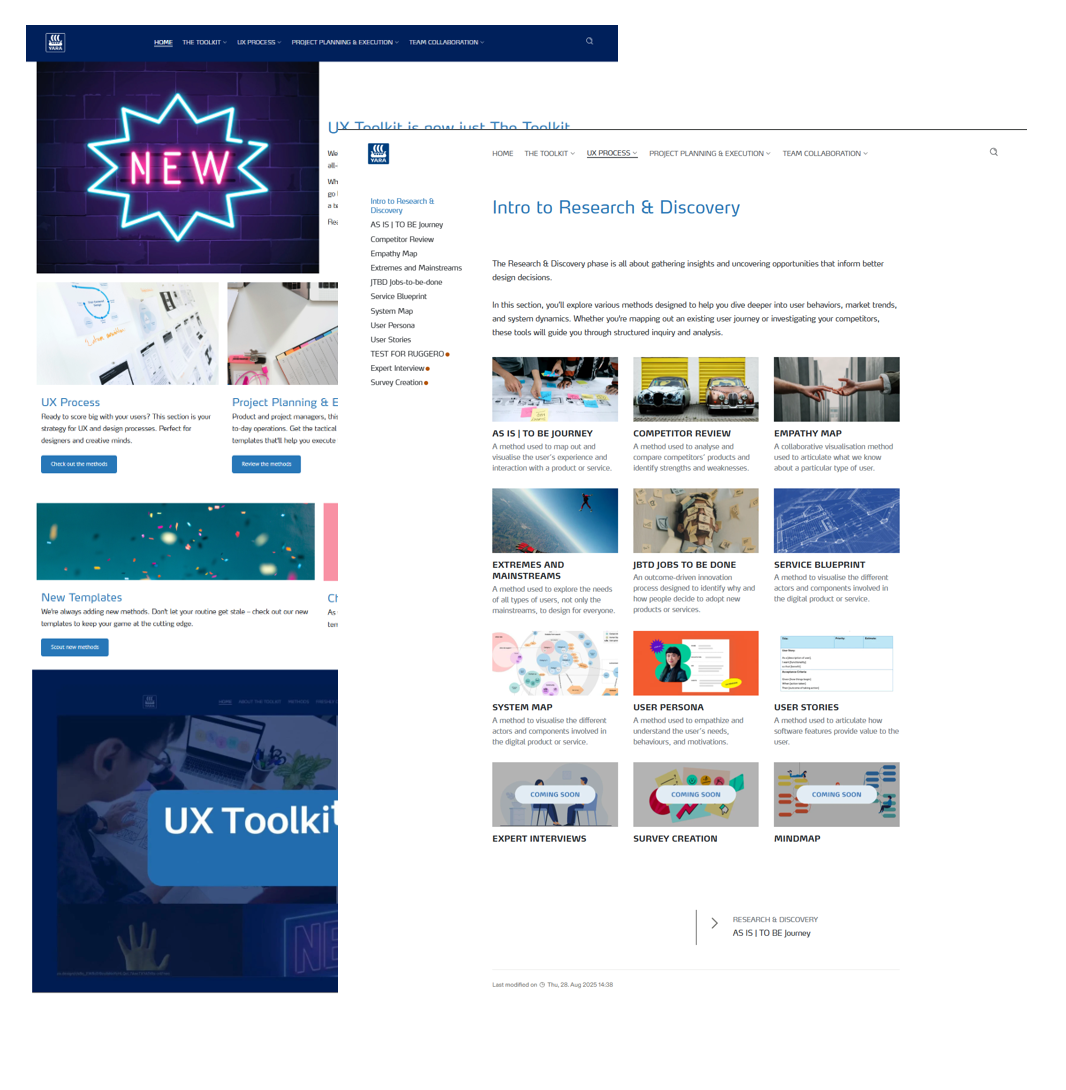
Methods and good practices were documented and made accessible, allowing team members to reuse and improve them over time. When new approaches were introduced, they were tested and then shared so others could learn from the results. All methodologies were documented and offered with templates and guidelines as part of a comprehensive UX toolkit.
We also hosted knowledge sessions with external experts to share success stories and new tools, ensuring we challenged our processes and stayed innovative.
This created a culture where growth was intentional and based on a collective effort.